For homes built on a concrete slab foundation—a highly common architectural style in states like Texas, California, and Florida—the plumbing network is literally buried within or directly beneath the concrete. When one of these subterranean pipes develops a pinhole leak or fractures entirely, it is known as a "slab leak."
Unlike a dripping faucet or an exposed burst pipe, a slab leak is an invisible threat. It can hemorrhage thousands of gallons of water into the soil beneath your home before a single drop becomes visible indoors. Left unchecked, the water will erode the soil, causing the foundation to shift, crack, or completely fail.
Detecting and mitigating a slab leak requires specialized technology and a deep understanding of structural plumbing.
The Silent Alarms: 5 Early Warning Signs of a Slab Leak
Because the leak is buried under inches of concrete, homeowners must rely on secondary indicators to catch the problem before structural damage occurs.
- Unexplained Spikes in Water Bills: A sudden, drastic increase in your monthly water usage, despite no change in your household routines, is often the first and most reliable indicator of a subterranean leak.
- Warm Spots on the Floor: If your home utilizes a hot water line beneath the slab, a leak will radiate heat upward. You may notice unusually warm patches on your tile, hardwood, or carpet, or your pets may suddenly favor a specific spot on the floor.
- The Sound of Running Water: If all fixtures are turned off, the house is quiet, and you can still hear a faint hissing or the sound of water moving through pipes, water is actively escaping the system.
- Foundation Cracks and Floor Heaving: As water pools beneath the slab, expansive soils (like clay) will absorb the moisture and swell, pushing the concrete upward. Conversely, sandy soils may wash away, causing the slab to sink. Both scenarios result in cracked floor tiles, warped hardwood, and distinct cracks running up exterior brickwork or interior drywall.
- Persistent Mildew and Musty Odors: Moisture seeping up through the porous concrete creates a perfect breeding ground for mold beneath carpets and behind baseboards.
Modern Non-Invasive Detection Technology
In the past, locating a slab leak involved the "search and destroy" method: jackhammering random sections of the floor until the wet pipe was found. Today, professional leak detection relies on highly sensitive, non-invasive technology to pinpoint the exact location of the failure with margin-of-error down to the inch.
1. Acoustic Amplification (Ground Microphones)
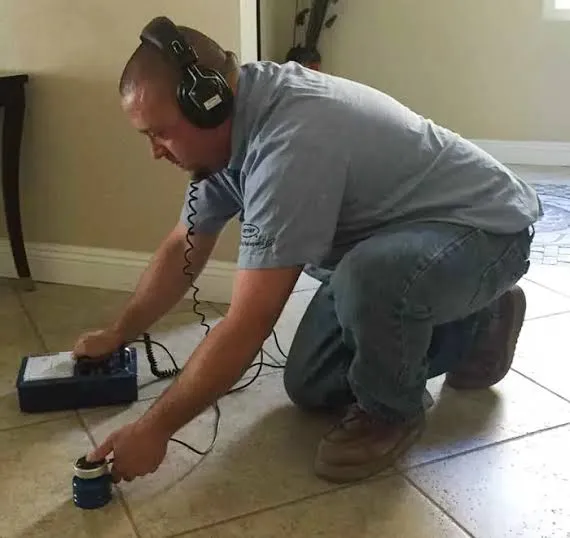
Water escaping a pipe under high pressure creates distinct sound frequencies. Technicians use highly specialized electronic listening devices, consisting of ground microphones and noise-canceling headphones, to "listen" through the concrete. By tracing the pipe's path and isolating the highest decibel of the hissing sound, they can accurately locate the leak.
2. Thermal Imaging (Infrared Cameras)
Infrared cameras are heavily utilized when a hot water line is suspected. The camera detects minute temperature differentials on the surface of the floor. A hot water slab leak will present as a glowing, expanding bloom of heat on the thermal display, allowing technicians to trace the leak exactly without moving a single piece of furniture.
3. Tracer Gas Testing
When acoustic and thermal methods are inconclusive, plumbers turn to tracer gas. The water system is drained, and an inert, non-toxic gas (typically a mixture of hydrogen and nitrogen) is pumped into the pipes under pressure. Because hydrogen molecules are incredibly small, the gas easily penetrates the concrete and flooring material at the exact site of the leak. Technicians then use a highly sensitive gas sniffer to detect where the gas is escaping into the room.
4. Hydrostatic Pressure Testing
This method is used primarily for testing the sanitary sewer system beneath the slab, rather than the pressurized water supply lines. An inflatable test ball is inserted into the main sewer cleanout to block the line. The system is filled with water, and the technician monitors the water level for up to 20 minutes. If the water level drops, there is a leak in the sub-slab sewer system.
Permanent Repair Methodologies
Once the leak is pinpointed, the focus shifts to the most cost-effective and structurally sound repair method.
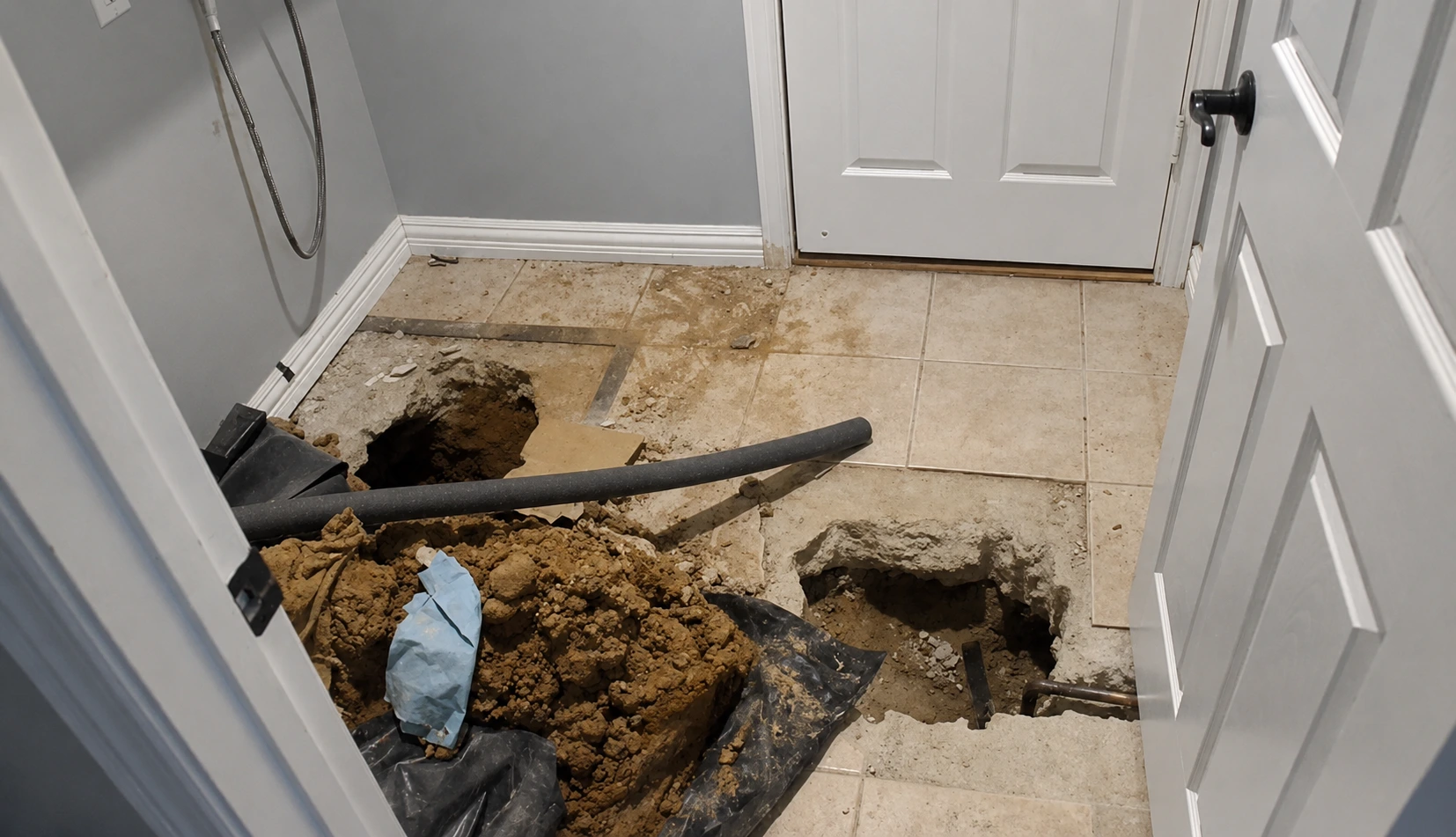
- Direct Access (Trenching): This involves jackhammering the concrete directly above the leak, cutting out the damaged copper or CPVC section, and soldering or coupling a new piece. This is the most disruptive method but is sometimes necessary for isolated leaks in newer homes.
- Tunneling: If the leak is under expensive flooring, custom cabinetry, or a structural load-bearing wall, a plumbing crew may tunnel under the home from the exterior. This preserves the interior of the home but requires extensive labor.
- Pipe Rerouting (Repiping): Often the most logical, permanent, and cost-effective solution. Instead of digging into the slab, the plumber simply caps off the leaking subterranean pipe at both ends and runs a brand new PEX line through the walls or attic space. This abandons the failing pipe in the ground and removes the risk of future slab leaks on that line entirely.
- Cured-in-Place Pipe (CIPP) Epoxy Lining: For sewer line slab leaks, a resin-saturated felt tube is pulled through the existing broken pipe and inflated. The epoxy cures, creating a "pipe within a pipe" that seals all cracks and prevents root intrusion, without requiring any concrete excavation.
Slab leaks are complex emergencies that threaten the very foundation of a property. If you suspect a leak, time is of the essence. Secure professional, non-invasive detection immediately to map the problem before irreversible structural damage occurs.