Slab leaks—plumbing failures that occur within or directly beneath a home's concrete foundation—are among the most structurally threatening issues a homeowner can face. In Nashville and the greater Middle Tennessee area, this problem is uniquely severe due to the region's distinct geological makeup.
For homeowners dealing with foundation concerns or unexplained water damage, understanding how local soil impacts your plumbing is the key to executing a permanent, code-compliant repair.
The "Clay Bowl Effect": Why Nashville Homes Are Vulnerable
Middle Tennessee soil conditions vary drastically, but neighborhoods like Woodbine, Antioch, and parts of East and South Nashville sit heavily on expansive clay soils.
This clay acts like a sponge. During wet Nashville springs, the soil absorbs heavy rainfall and expands significantly. Conversely, in the sweltering, dry heat of late summer, the soil undergoes severe moisture loss and shrinks. This constant cycle of swelling and contracting creates a shifting environment beneath your home, known as the "clay bowl effect."
For homes constructed on concrete slab foundations, this soil movement exerts immense hydrostatic pressure and lifting force. Over time, the stress transfers directly to the plumbing lines buried in the earth. Rigid traditional materials—like the copper piping common in older Davidson County properties—cannot flex with the shifting ground. Eventually, the pipes bend, shear, or split open, creating a subterranean slab leak.
Furthermore, areas like Bellevue and Forest Hills feature shallow limestone bedrock, making proper sub-base grading difficult during initial construction and leaving pipes vulnerable to friction, settling, and eventual rupture.
Recognizing a Sub-Slab Leak in Your Nashville Home
Because the ruptured pipe is buried under several inches of concrete, the symptoms of a slab leak are often subtle before they become catastrophic. Homeowners should watch for these secondary indicators:
- Spiking Metro Water Services Bills: A sudden, unexplained surge in your monthly water usage, despite no change in your household routines, is often the most reliable early indicator of a hidden leak.
- Warm Patches on Flooring: If a hot water supply line ruptures beneath the slab, it will radiate heat upward. You might notice unusual warmth radiating through your tile or hardwood.
- Foundation and Drywall Cracks: As leaking water erodes the soil or causes the expansive clay to over-swell, your slab will heave or sink. This results in stair-step cracks in exterior brickwork, uneven flooring, or diagonal cracks above interior doorframes.
- Persistent Moisture and Musty Odors: Water seeping upward through the porous concrete creates a breeding ground for mildew under carpets and behind baseboards.
Code-Compliant Repair Solutions for Davidson County
If professional leak detection confirms a sub-slab failure, the repair must be executed meticulously and in strict adherence to the Metro/Nashville Codes Administration requirements. Plumbers generally utilize one of three primary repair methods:
1. Direct Access (Trenching the Slab)
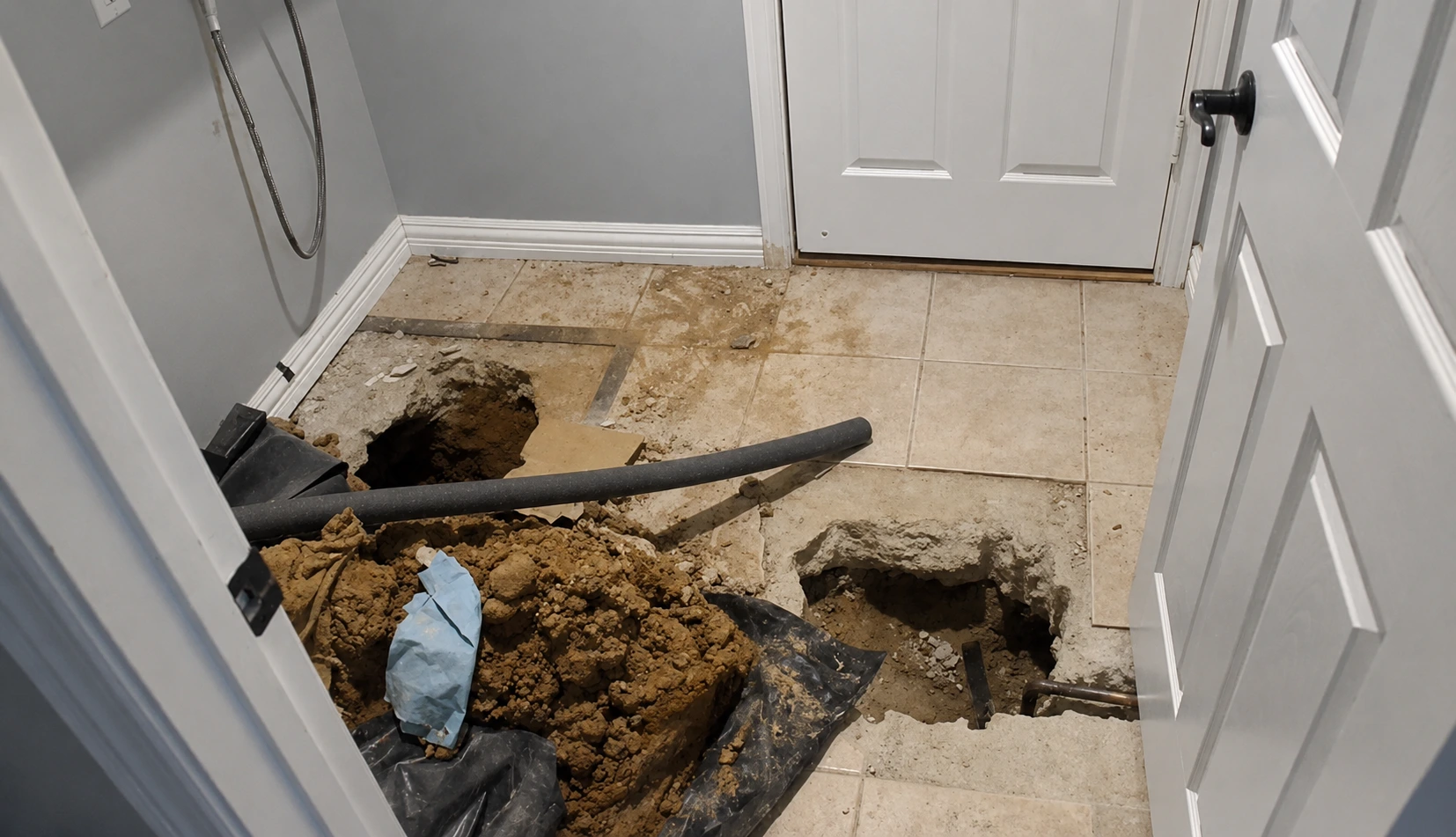
For localized, easily identifiable leaks—often in newer homes with accessible lines—the most straightforward method is to jackhammer a small section of the concrete directly above the fracture. The damaged section of pipe is cut out and replaced. While disruptive to the immediate flooring, it is highly effective for isolated incidents.
2. Under-Slab Tunneling
If the leak is located beneath structural load-bearing walls, expensive custom cabinetry, or high-end hardwood floors, excavating from above is not viable. Instead, a specialized plumbing crew tunnels under the foundation from the home's exterior to reach the pipe. This preserves the interior of your home but requires significantly more labor and precise soil backfilling to prevent future settling.
3. Pipe Rerouting (The Permanent Fix)
In many cases—especially for older homes suffering from failing copper lines—the most logical approach is to abandon the compromised sub-slab pipe entirely. The plumber caps the leaking line at both ends and runs a brand-new, flexible PEX line through the walls or attic space. Because PEX is highly resilient to temperature fluctuations and completely removes the plumbing from the shifting Nashville clay, rerouting is widely considered the most permanent, cost-effective defense against future slab leaks.
Left unaddressed, a slab leak will compromise your foundation, lead to extensive water damage, and generate thousands of dollars in structural repairs. Securing a licensed Nashville plumbing professional ensures your home's foundation is protected and the system is restored to full operational health.