In Nashville, a water heater is more than a convenience—it’s a hardworking appliance constantly battling the elements. Because Middle Tennessee is a limestone-rich region, the municipal water supply often carries a high concentration of dissolved calcium and magnesium. While safe to drink, these minerals are the leading cause of premature water heater failure in Davidson County.
If you are experiencing inconsistent temperatures, popping noises, or a leaking tank, understanding how Nashville’s local water chemistry affects your unit is essential for a lasting repair.
The Nashville Mineral Problem: Sediment and Scaling
Most homeowners in neighborhoods like Sylvan Park, Bellevue, and Antioch deal with "hard water." When this water is heated, the minerals settle out and solidify, creating a thick layer of rock-like scale at the bottom of your tank.
1. Efficiency Loss and Noise
In gas water heaters, this sediment layer acts as a barrier between the burner and the water. The unit must run longer and hotter to penetrate the scale, which spikes your Piedmont Natural Gas bill. This often results in a "knocking" or "popping" sound—the sound of steam bubbles trapped beneath the sediment layer.
2. Element Burnout
In electric water heaters, sediment can completely bury the lower heating element. This causes the element to overheat and "dry fire," leading to a sudden loss of hot water. Replacing these elements is a common repair in the Nashville metro area, but without a full system flush, the new element will likely fail within months.
Metro Nashville Codes: The Thermal Expansion Tank Requirement
A critical detail often missed by DIYers but strictly enforced by the Metro Nashville Department of Codes and Building Safety is the requirement for a thermal expansion tank.
Nashville’s water system is largely a "closed-loop" system, often featuring backflow preventers or pressure-reducing valves (PRVs) to manage high municipal pressure. When water is heated, it expands. In a closed system, this expansion has nowhere to go, creating massive pressure spikes that can rupture your tank or cause your Temperature and Pressure (T&P) relief valve to leak constantly.
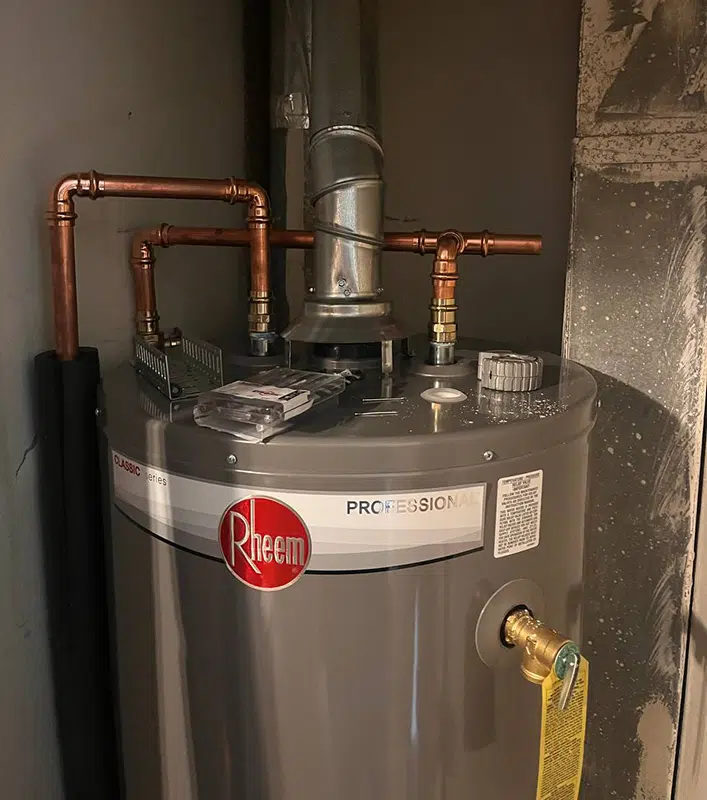
Local Code Compliance: According to the International Plumbing Code (IPC) adopted by Nashville, any home with a backflow preventer or "closed" system must have a properly calibrated thermal expansion tank installed on the cold water supply line. If your current unit lacks one, a professional repair should include this upgrade to prevent a catastrophic tank burst.
Common Signs Your Nashville Water Heater Needs Repair
- Discolored or "Rusty" Water: If your hot water looks reddish or brown but the cold water is clear, the internal glass lining of your tank or the sacrificial anode rod has likely failed.
- The "Rotten Egg" Smell: In some Middle Tennessee wells and even certain municipal pockets, sulfur-reducing bacteria can react with the magnesium anode rod in your heater, creating a foul odor. Switching to an aluminum or zinc alloy rod is the localized solution.
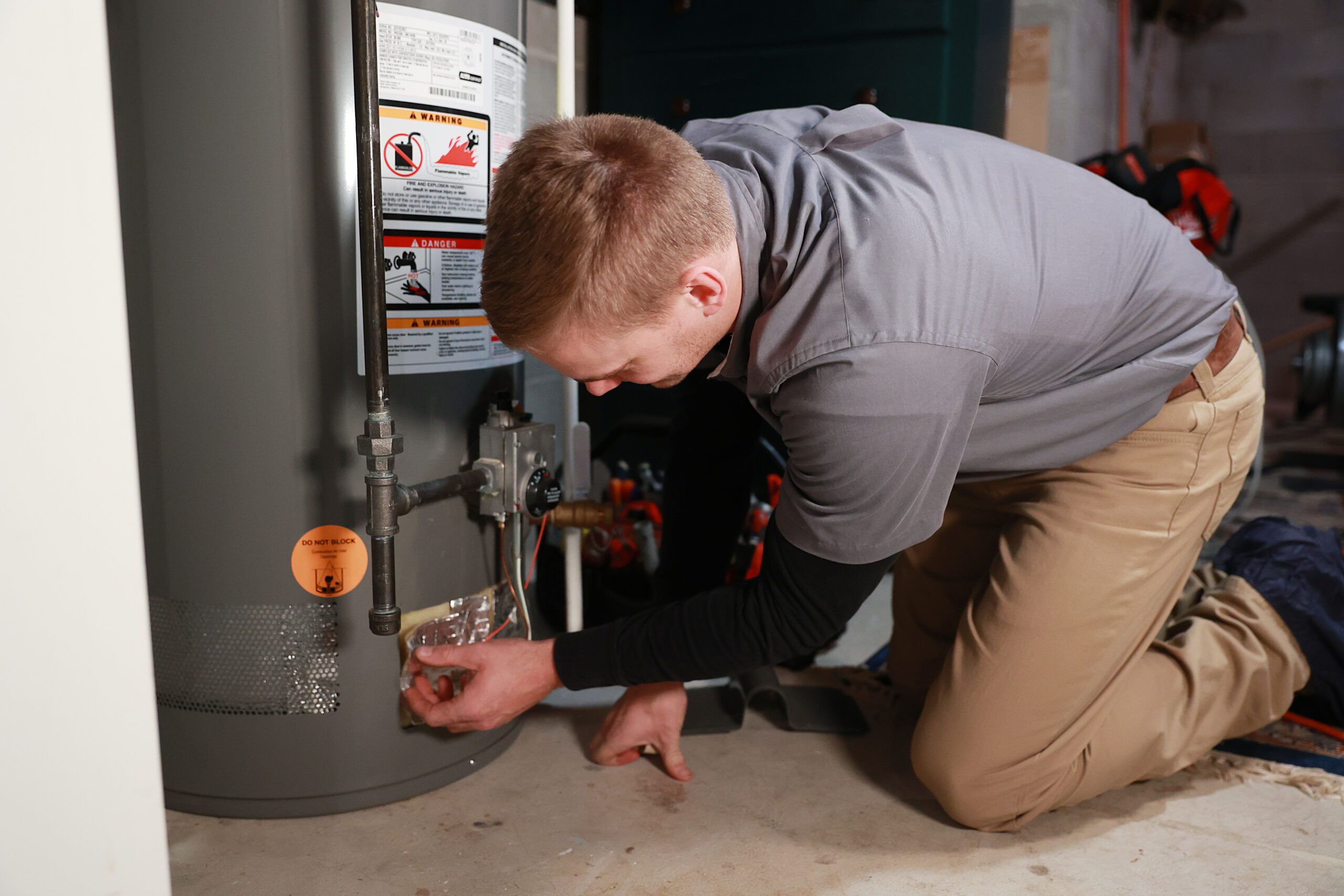
- Frequent Pilot Light Failures: For gas units in older Nashville homes, dust and debris in basements or utility closets can clog the pilot orifice or the vapor sensor, a safety feature that requires professional cleaning to restore operation.
Repair vs. Replacement: Making the Call
On average, a water heater in Nashville lasts 8 to 12 years.
- When to Repair: If your unit is less than 8 years old and facing issues like a broken thermostat, a failed heating element, or a leaking T&P valve, a professional repair is highly cost-effective.
- When to Replace: If the tank itself is leaking from the bottom, the internal vessel has fractured. Due to the high mineral content in the region, once a tank begins to leak, it cannot be patched and must be replaced to avoid flooding.
Whether you are looking to descale your tankless unit or need an emergency repair for a standard 50-gallon tank, ensure your technician understands the specific pressure and mineral challenges of the Nashville water grid.
Proper maintenance—specifically an annual sediment flush—can add up to 5 years of life to your water heater, saving you thousands in premature replacement costs.