An active roof leak does not care what time it is, and it rarely happens on a sunny afternoon. When a severe storm tears off shingles or a massive tree branch punches through your decking, you likely will not be able to get a full roof replacement or permanent repair scheduled for several weeks.
In the meantime, every drop of water entering your home is ruining insulation, dissolving drywall, and creating the perfect breeding ground for toxic black mold. Knowing the early signs of an emergency roof leak is important, but once the water is pouring in, the immediate solution to halt the destruction is emergency roof tarping.
The Purpose of a Temporary Roof Tarp
A roof tarp is not a permanent fix, but it is a critical emergency intervention. Proper tarping achieves three vital goals for a homeowner in crisis:
- Stops Active Water Intrusion: A heavy-duty woven polyethylene tarp, when secured correctly, sheds water perfectly, instantly stopping the interior bleeding and protecting your living space.
- Protects the Structural Decking: Leaving bare plywood exposed to rain and UV rays will cause the wood to warp and rot within days. Tarping preserves the decking, preventing a simple patch job from turning into a massive, expensive structural rebuild.
- Fulfills Insurance Requirements: Almost all homeowner insurance policies contain a strict "mitigate further damage" clause. This means you are legally obligated to take reasonable steps to prevent the water damage from getting worse after the initial event. Professional tarping proves to your insurance adjuster that you took immediate, responsible action.
Why DIY Tarping is Highly Dangerous
In a panic, many homeowners attempt to throw a cheap blue plastic tarp over a hole and weigh it down with bricks or spare tires. This is a recipe for disaster.
Safety Warning: Falls from roofs are consistently one of the leading causes of severe injury. Navigating a steep-pitch, wet roof while wrestling with a plastic sail in high winds is incredibly dangerous and should never be attempted by an untrained homeowner.
Furthermore, improper DIY tarping usually fails. High winds will easily rip a loosely secured tarp away. Worse, if you use the wrong nails in the wrong locations to secure it, you will inadvertently punch dozens of new leak holes into perfectly healthy sections of your roof, compounding the very causes of roof leaks you were trying to fix.
The Professional Tarping Method
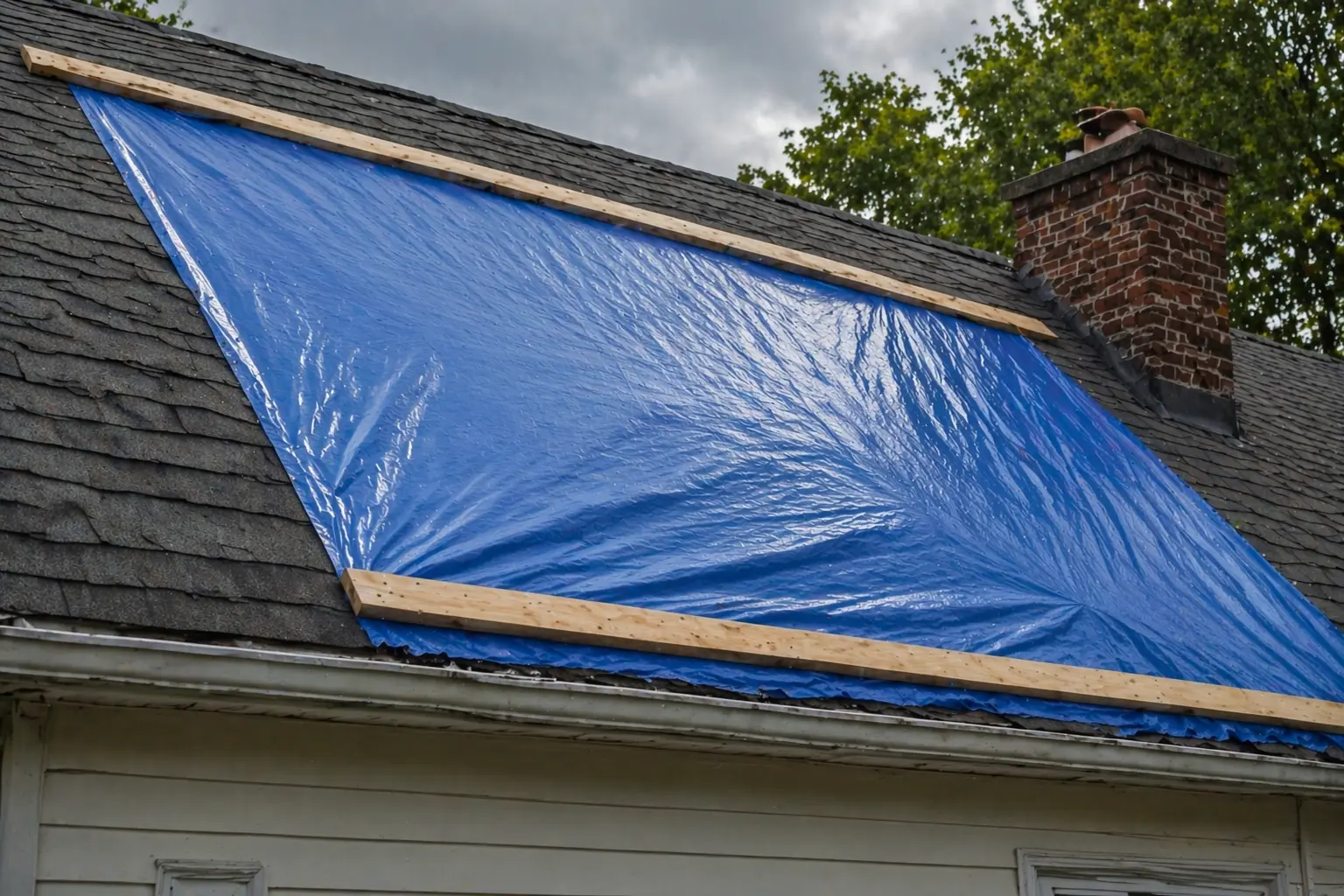
When you call an emergency roofing service, they do not just lay down plastic. They execute a structural, temporary weatherproofing system designed to withstand the elements for up to 90 days.
- Debris Removal: Professionals first safely remove the fallen limbs, shattered tiles, or torn metal that caused the breach.
- Heavy-Duty Materials: They utilize specialized, UV-resistant tarps designed to withstand weeks of direct sun and heavy rain without degrading or tearing.
- Furring Strips: The tarp is never nailed directly to the roof deck. Professionals wrap the edges of the tarp around wooden furring strips, which are then bolted firmly through the decking into the roof trusses. This creates an airtight, watertight seal that cannot be lifted by severe wind gusts.
- Over-the-Ridge Installation: To ensure water cannot run underneath the top edge of the tarp, professionals will extend the material all the way up and over the main ridge line of the roof, securing it safely on the opposite, unaffected side.
What to Do While You Wait
If a storm has compromised your roof, clear your interior space immediately. Place heavy-duty buckets under active drips and use old towels to protect your flooring. If the drywall on your ceiling begins to bulge with trapped water, carefully poke a small hole in the lowest point to allow it to drain cleanly, which prevents the entire ceiling from collapsing under the weight.
Do not wait for the rain to stop before seeking help. Explore your options for emergency roof repairs immediately to deploy a temporary tarp, secure your home's envelope, and start the mitigation process before secondary damage takes hold.


