A leaking roof is one of the most stressful experiences a homeowner can face. With the national average cost of a full asphalt shingle roof replacement sitting between $8,000 and $15,000 in 2026—and premium materials like tile or metal pushing well past $25,000—the immediate question on every homeowner's mind is: "Will my insurance cover this?"
The short answer is: It depends entirely on what caused the leak.
Homeowner’s insurance is a financial safety net designed to protect you from sudden, unpredictable disasters. It is not a home warranty, and it absolutely does not cover the inevitable wear and tear of aging building materials. Understanding how insurance adjusters classify roof damage, and the specific clauses buried in your policy, is the key to successfully navigating a claim and avoiding a devastating denial.
The Golden Rule: Sudden and Accidental
For a roof leak to trigger a payout, the damage must meet the definition of "sudden and accidental." Most standard HO-3 policies operate on an "open perils" basis for the dwelling, meaning damage to your roof is covered unless the specific cause is explicitly excluded in your policy documents.
Covered Perils: When Insurance Pays
Insurance will generally cover roof repairs or a full replacement if the leak was caused by an unpredictable, severe weather event or an "Act of God."
- Wind Damage: Straight-line winds, tornadoes, or hurricanes that physically tear shingles off the roof deck, break the adhesive sealant strips, or violently bend metal flashing out of place.
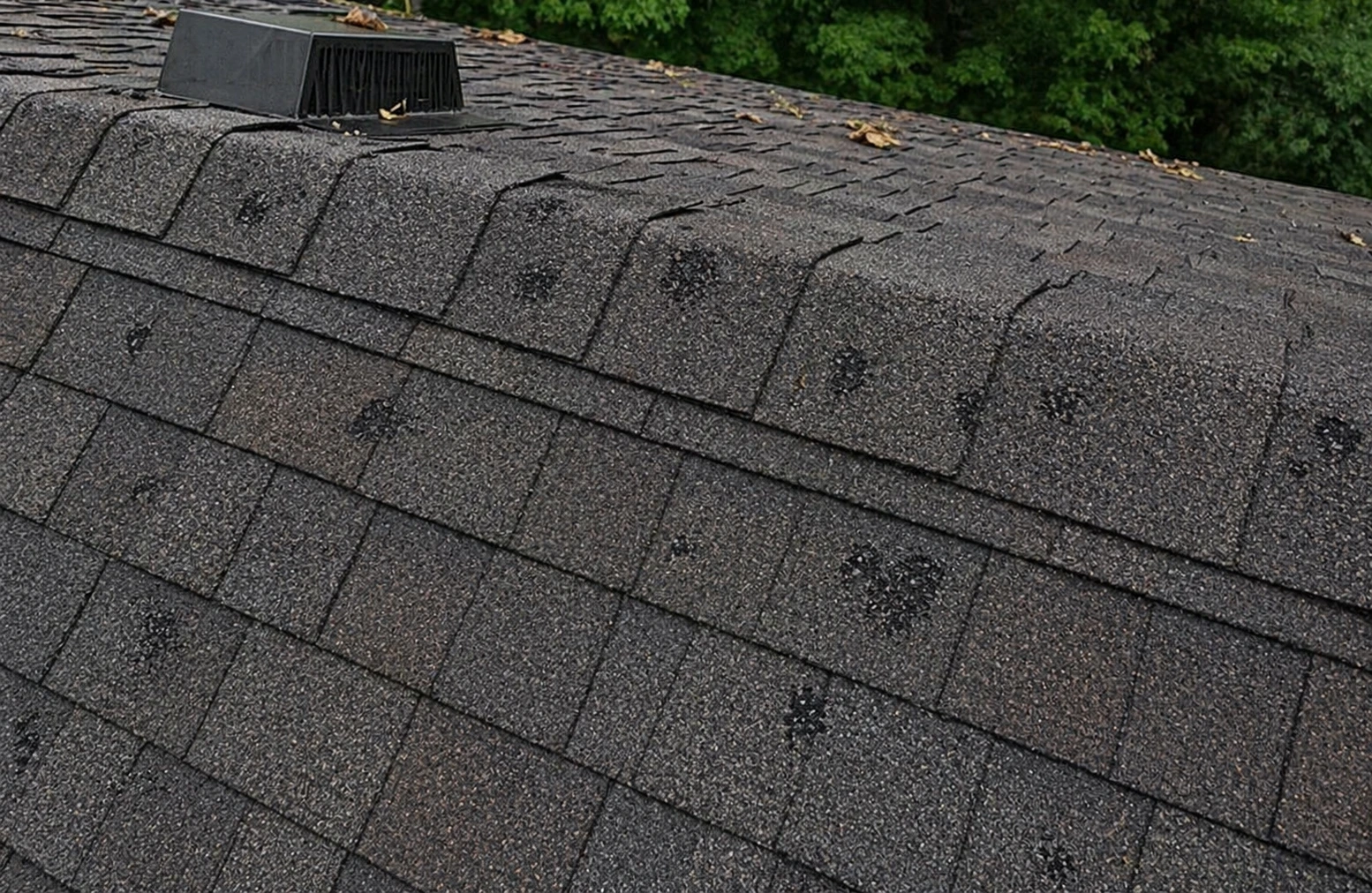
- Hail Impacts: Severe hail that crushes the fiberglass matting of an asphalt shingle, violently strips away the protective ceramic granules, or shatters concrete tiles.
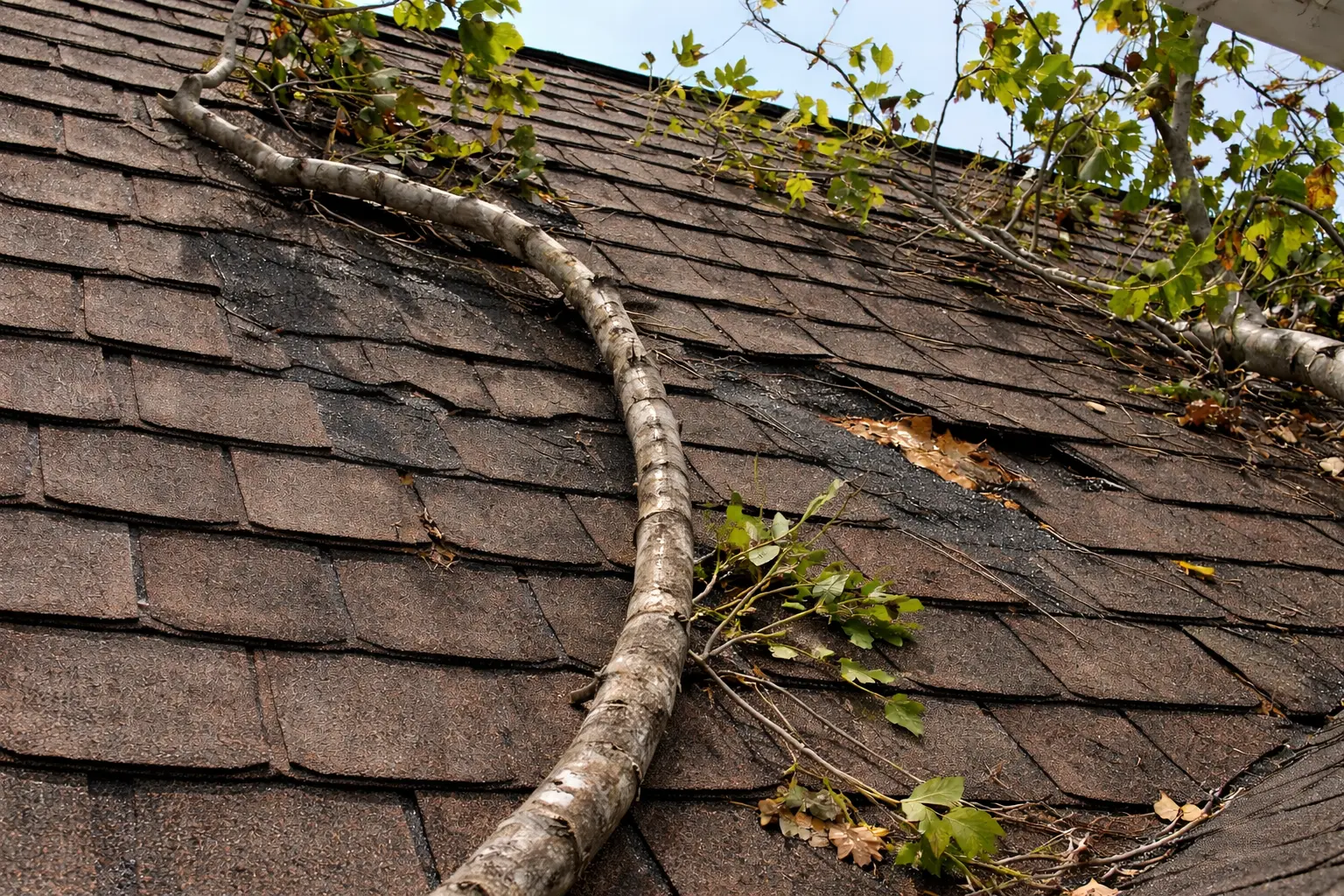
- Falling Objects: A healthy tree, heavy branch, or utility pole that breaks during a storm and physically punctures the roof decking.
- Fire or Lightning: Direct lightning strikes that burn the roofing material or damage the underlying wooden trusses.
If your roof sustains this type of sudden storm damage repair requirement, the policy will typically pay to replace the damaged section of the roof and repair the resulting interior water damage, such as ruined drywall, saturated insulation, and warped hardwood flooring.
Excluded Perils: When Claims Are Swiftly Denied
Insurance companies will swiftly deny a roof leak claim if the adjuster determines the damage resulted from negligence, lack of maintenance, or simply reaching the end of the material's structural lifespan.
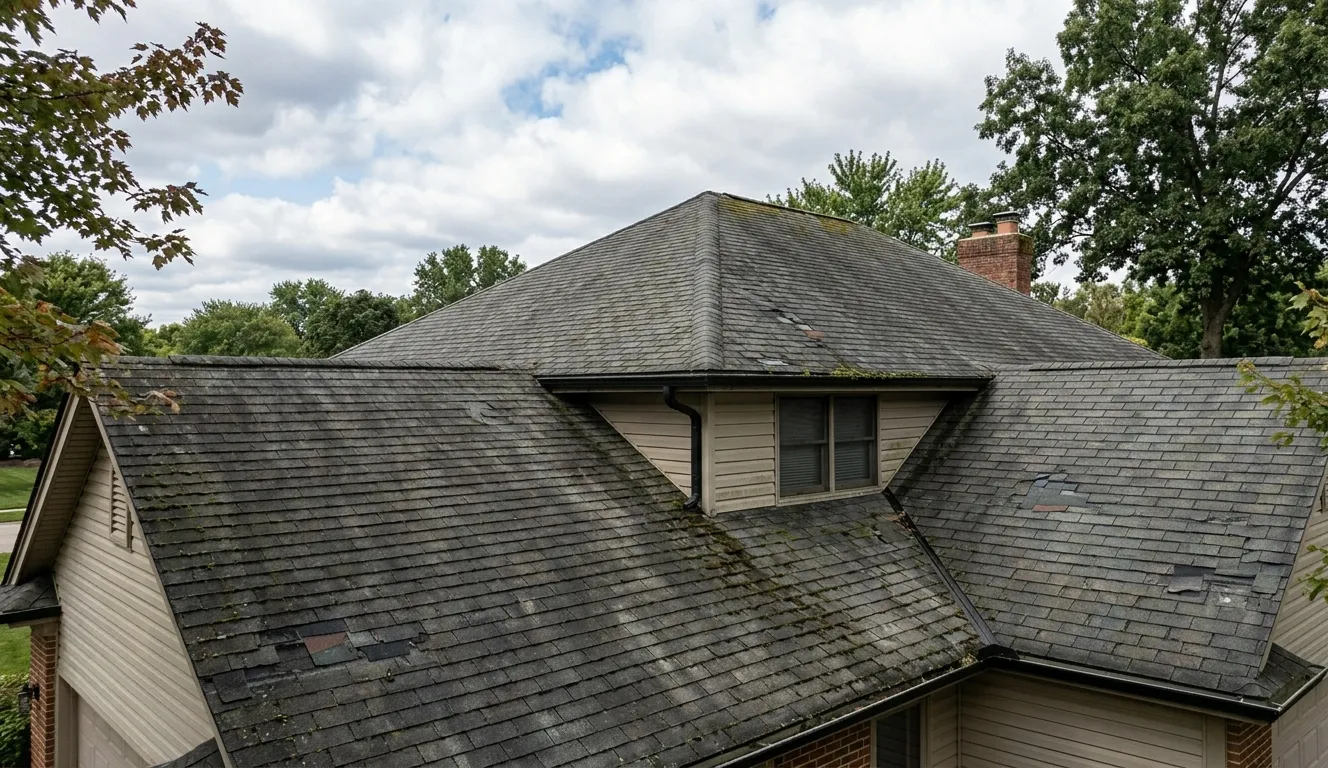
- Age and Wear and Tear: If your asphalt shingle roof is 25 years old and the shingles have naturally dried out, curled, buckled, or lost their granules due to decades of UV exposure, the insurance company will not pay for a new roof. It is solely the homeowner's responsibility to replace aging materials.
- Lack of Maintenance: If a leak occurs because you failed to clean wet pine needles out of your roof valleys for five years, or because you ignored crumbling brick mortar around your chimney, the claim will be denied due to negligence.
- Pest Damage: Damage caused by raccoons chewing through your eaves, squirrels nesting in your attic, or birds destroying your vent screens is almost universally excluded from standard policies.
- Improper Original Installation: If the original roofer failed to install an ice and water shield in the valleys, or used an improper nailing pattern that caused the shingles to slide off, the insurance company will not cover the resulting failure. You would have to seek recourse with the original contractor's liability insurance.
The "Resulting Damage" Exception
There is a highly frustrating, yet critical, nuance in insurance law regarding poor maintenance.
If your 25-year-old roof finally leaks during a rainstorm due to extreme old age (which is an excluded peril) and ruins your living room ceiling, the insurance company will deny the claim to fix or replace the roof itself. However, many policies will approve the claim to fix the interior ceiling and flooring damage.
The logic is that the interior water damage was a sudden, resulting event, even though the maintenance failure that caused it is excluded.
RCV vs. ACV: How Roof Age Impacts Your Payout
Even if your claim is approved for a covered peril like hail, the amount of money you receive depends on how your specific policy values your roof. In 2026, insurance carriers are aggressively changing how they handle older roofs.
- Replacement Cost Value (RCV): This is the ideal scenario. The insurance company pays the current, modern-day market price to replace your damaged roof with brand-new materials of the same quality, minus your deductible.
- Actual Cash Value (ACV): If your roof is older (typically over 10 or 15 years, depending on your carrier), your policy may have an ACV schedule. This means the insurance company will deduct the depreciation of your roof based on its age. If a new roof costs $10,000, but your roof has exhausted 75% of its lifespan, they will only write you a check for $2,500. You are responsible for the rest out-of-pocket.
Always check your declarations page to see if you have an ACV or RCV policy on your roof surface.
Steps to Take If You Suspect Storm Damage
If a severe weather event has compromised your home, you must act strategically. Policies have strict filing windows, often requiring you to submit a claim within 180 days to one year of the specific "date of loss."
- Mitigate the Damage First: You are legally obligated by your policy to stop further water from entering your home. Review the temporary roof repair guide and immediately hire professionals to safely tarp the breach.
- Document the Date: Record the exact date and time the severe weather hit your neighborhood. Adjusters will cross-reference this with national meteorological databases.
- Get a Professional Assessment: Never climb on a damaged roof yourself. Have a licensed, local roofing professional document the mechanical damage with high-resolution photographs before you call the insurance adjuster.
Navigating a roof claim requires proving the damage was sudden, accidental, and definitively storm-related. Relying on specialized emergency roof repair professionals to document the failure is the best way to ensure your claim is treated fairly and your home is fully restored.