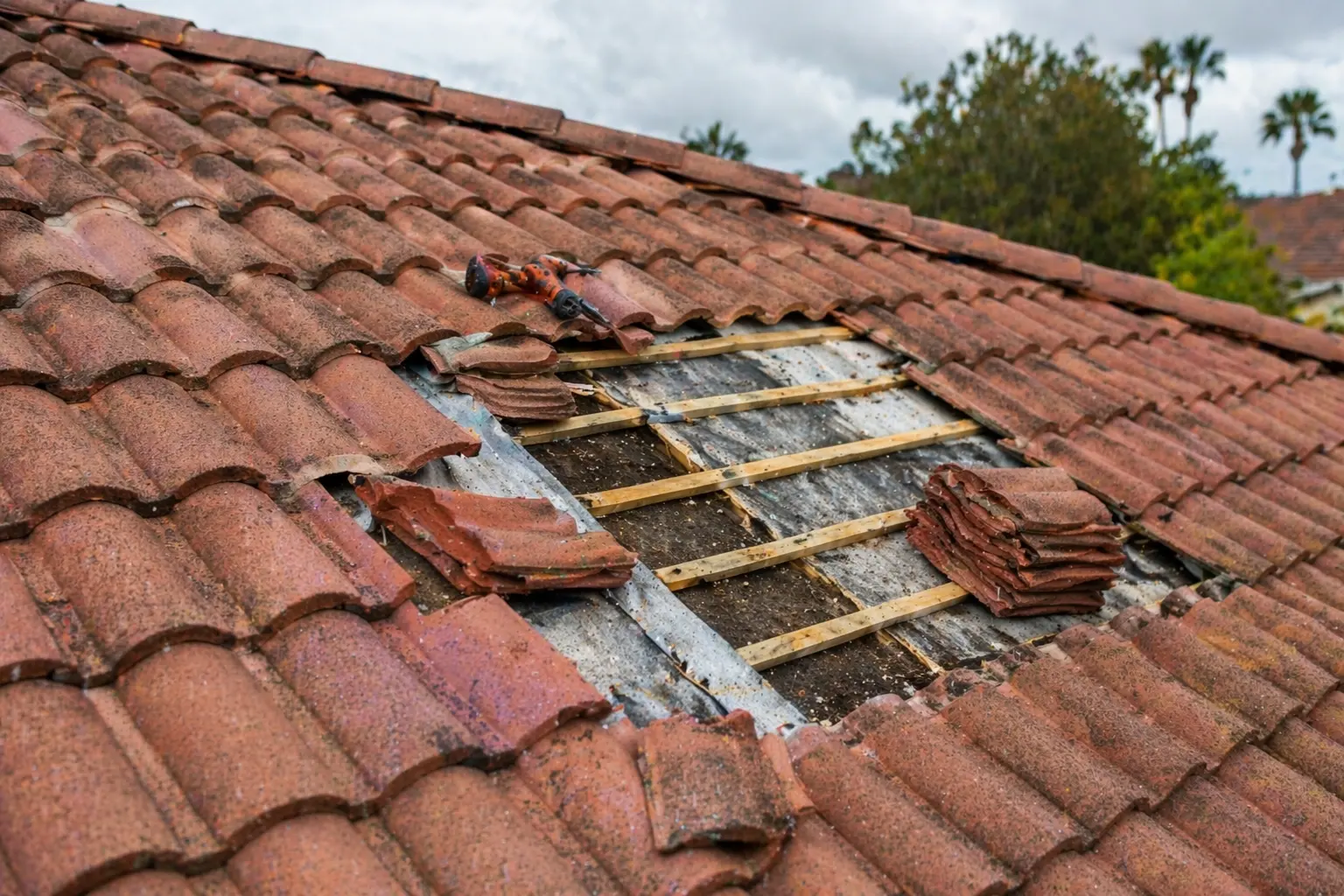
Oak Brook features some of the most stunning residential architecture in DuPage County, with sprawling estates and luxury homes relying on premium clay or concrete tile roofs. While these heavy-duty roofing systems can easily last 50 to 100 years, they are not immune to sudden emergencies.
When severe Midwest weather strikes or the hidden waterproof layer beneath the tiles fails, water can rapidly penetrate your home. Because tile roofing requires highly specialized knowledge, handling a leak is vastly different than patching a standard asphalt shingle roof.
The Hidden Truth About Your Tile Roof
A common misconception among homeowners is that the heavy exterior tiles are the primary waterproofing layer. They are not. The tiles act as a durable, aesthetic shield against the sun, wind, and impact. The actual waterproofing happens at the underlayment—a heavy-duty membrane installed directly on your roof deck.
When you see a water stain on your ceiling or active dripping in your living room, it means both systems have failed. Identifying the five critical signs of an emergency roof leak early is essential, especially with tile roofs where water can travel several feet beneath the tiles before entering the home.
Leading Causes of Tile Leaks in Northern Illinois
Tile systems are incredibly robust, but the specific climate of the Greater Chicago area exploits certain vulnerabilities. Understanding the common causes of roof leaks can help you identify exactly why your tile system is failing.
- Shattered or Slipped Tiles: Severe hail storms, common in northern Illinois spring weather, can crack concrete or clay tiles. High winds can also dislodge them. Once the protective tile is compromised, UV rays and heavy rain directly assault the underlayment, causing it to dry out, crack, and eventually leak.
- Underlayment Rot: If your Oak Brook home is 20 to 30 years old, the original felt underlayment may be reaching the end of its natural lifespan. Even if your tiles look perfect from the street, crumbling underlayment will inevitably let water seep into your attic.
- Valley Flashing Failures: Roof valleys handle a massive volume of water during a heavy Illinois downpour. Debris from mature oak trees can block these channels, pushing water sideways underneath the tiles and through the metal flashing seams.
Immediate Steps for an Active Tile Leak
If water is actively entering your home, rapid mitigation is critical to protect your drywall, hardwood floors, and electrical systems.
Safety Warning: Never attempt to walk on a wet tile roof. Clay and concrete tiles are incredibly slippery, and improper foot placement will snap the tiles, instantly multiplying your repair costs.
- Clear the Interior: Move furniture, rugs, and valuables away from the drip zone immediately.
- Relieve Ceiling Pressure: If your drywall is bulging with water, use a screwdriver to poke a small hole in the center of the bulge. This allows the water to drain cleanly into a bucket rather than collapsing the entire ceiling.
- Secure the Envelope: If a severe storm has opened a massive hole in your roof, you must immediately read up on the best practices or hire professionals to do it for you while you wait for permanent repairs.
The Professional Oak Brook Repair Process
Standard roofers often lack the specialized tools and training to navigate and repair tile. Patching a tile roof with roofing tar is an amateur mistake that traps moisture and accelerates rotting.
A proper repair requires a surgical "lift and relay" process. Our Oak Brook tile roof repair specialist carefully remove the tiles surrounding the leak, numbering them to ensure they return to their exact positions. They strip away the rotted underlayment down to the bare wood, install a modern, self-adhering modified bitumen underlayment, and re-install the original tiles seamlessly.
Protect Your DuPage County Investment
A tile roof is a premium architectural feature that demands premium care. Do not let a specialized repair fall into the hands of an unqualified contractor. If your tile roof is actively leaking or has sustained severe storm damage, seek professional intervention immediately to protect the structural integrity of your home.


